Weaving Looms Guide: Explore Textile Manufacturing Principles, Process Insights, and Essential Information
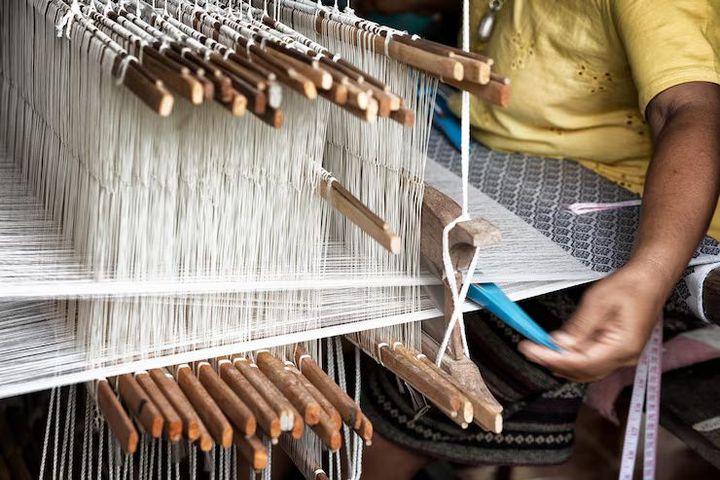
Weaving looms are textile machines designed to interlace warp and weft yarns to form woven fabric. They exist to transform yarns into structured textiles with specific patterns, strengths, and surface characteristics. The weaving process is one of the oldest fabric manufacturing techniques, dating back thousands of years, and remains fundamental to the global textile industry.
Early looms were manually operated and relied on simple mechanical motion. As textile demand increased, loom technology evolved to improve speed, consistency, and fabric quality. Mechanical power, followed by electrical and electronic control systems, enabled looms to operate continuously with greater precision. Modern weaving looms integrate advanced motion control, sensors, and automation to produce a wide variety of fabrics efficiently.
Today, weaving looms are used in apparel, home textiles, industrial fabrics, technical textiles, and specialty applications, supporting both mass production and specialized fabric requirements.
Importance: Why Weaving Looms Matter in Textile Manufacturing
Weaving looms are essential to fabric production because they determine fabric structure, appearance, and performance. Their importance lies in their ability to produce consistent, durable textiles at scale.
Who relies on weaving looms
-
Textile manufacturing plants
-
Apparel and garment producers
-
Home textile manufacturers
-
Technical and industrial textile producers
-
Fabric designers and development teams
-
Production planning and quality teams
Key challenges weaving looms help address
-
Creating stable and repeatable fabric structures
-
Maintaining consistent yarn tension and alignment
-
Supporting high-speed production with minimal defects
-
Producing diverse weave patterns efficiently
-
Ensuring fabric strength and dimensional stability
Weaving looms enable manufacturers to meet quality expectations while maintaining productivity across different fabric types.
Recent Updates and Trends (2024–2025)
Weaving loom technology continues to advance as the textile industry focuses on efficiency, flexibility, and digital integration.
Recent trends
-
Electronic shedding systems (2024): Improved pattern accuracy and faster design changes.
-
Energy-efficient drive systems (2024–2025): Reduced power consumption during high-speed operation.
-
Advanced loom monitoring (2024): Real-time detection of yarn breaks and fabric defects.
-
Automation and connectivity (2025): Integration with production management and data systems.
-
Higher-speed weaving capabilities (2025): Structural and mechanical improvements supported increased output.
These developments highlight the ongoing modernization of weaving technology.
Laws and Policies Affecting Weaving Loom Operations
Weaving loom operations are governed by industrial safety, labor, and environmental regulations.
Key regulatory considerations
-
Workplace safety standards: Address operator protection around moving parts.
-
Noise and vibration regulations: Apply to high-speed loom environments.
-
Electrical equipment standards: Govern control systems and power components.
-
Environmental guidelines: Address energy usage and waste management.
-
Maintenance and inspection policies: Require regular equipment checks.
Compliance with these policies supports safe and responsible textile manufacturing.
Tools and Resources Used with Weaving Looms
Efficient loom operation depends on specialized tools and technical resources.
Weaving and Control Tools
-
Electronic loom control panels
-
Yarn tension monitoring systems
-
Pattern programming interfaces
-
Fabric defect detection sensors
-
Speed and synchronization controls
Maintenance and Quality Resources
-
Preventive maintenance schedules
-
Lubrication and alignment tools
-
Warp and weft inspection guides
-
Fabric testing references
-
Operator training manuals
These resources help maintain consistent fabric quality and machine reliability.
Table: Common Types of Weaving Looms
| Loom Type | Description |
|---|---|
| Shuttle Loom | Uses a shuttle to carry weft yarn |
| Air Jet Loom | Uses compressed air for weft insertion |
| Water Jet Loom | Uses water jet for synthetic yarn insertion |
| Rapier Loom | Uses rigid or flexible rapiers |
| Projectile Loom | Uses a projectile to insert weft yarn |
Table: Typical Fabrics Produced Using Weaving Looms
| Fabric Category | Examples |
|---|---|
| Apparel Fabrics | Cotton, polyester, blended fabrics |
| Home Textiles | Curtains, upholstery, bed linen |
| Industrial Fabrics | Conveyor belts, filters |
| Technical Textiles | Automotive and protective fabrics |
| Decorative Fabrics | Jacquard and patterned textiles |
Weaving Loom Production Workflow Overview
A standard weaving loom workflow includes:
-
Warp Preparation
Warp yarns are arranged and tensioned on the loom. -
Shedding
Warp yarns are separated to form a shed. -
Weft Insertion
Weft yarn is inserted across the shed. -
Beating-Up
The reed pushes the weft yarn into place. -
Fabric Formation
Interlaced yarns form woven fabric. -
Fabric Take-Up
Finished fabric is wound for further processing.
This workflow enables continuous and controlled fabric production.
FAQs
1. What is a weaving loom used for?
A weaving loom is used to interlace warp and weft yarns to produce woven fabric.
2. How do modern weaving looms differ from traditional looms?
Modern looms use electronic controls, automation, and advanced insertion methods for higher speed and precision.
3. What determines the choice of weaving loom type?
Fabric type, yarn characteristics, production speed, and design requirements influence loom selection.
4. Can weaving looms produce patterned fabrics?
Yes. Jacquard and dobby systems enable complex patterns and designs.
5. How is fabric quality monitored during weaving?
Sensors and inspection systems detect yarn breaks, defects, and inconsistencies in real time.
Conclusion
Weaving looms remain foundational machines in textile manufacturing, enabling the transformation of yarns into structured fabrics with diverse properties and applications. From traditional shuttle looms to advanced air jet and rapier systems, loom technology continues to evolve to meet modern production demands. Recent advancements in electronic controls, energy efficiency, and automation have enhanced productivity and fabric consistency. Supported by safety regulations, technical tools, and skilled operation, weaving looms continue to play a vital role in global textile production and fabric innovation.