Pharmaceutical Manufacturing Equipment Knowledge: Equipment Used in Pharmaceutical Plants
Pharmaceutical manufacturing equipment refers to specialized industrial machines used to produce medicines, vaccines, tablets, capsules, and sterile drug formulations. These machines support the transformation of chemical or biological ingredients into safe and standardized pharmaceutical products.
The pharmaceutical industry relies heavily on automated and controlled production systems to ensure that medicines meet strict safety and quality requirements. Manufacturing equipment performs several tasks, including mixing raw ingredients, granulation, drying, compression, coating, filling, packaging, and sterilization.
Modern pharmaceutical plants often use advanced automation systems and digital monitoring technologies. These systems help maintain consistent production conditions, reduce contamination risks, and support compliance with international manufacturing standards.
Equipment used in pharmaceutical manufacturing is designed to handle sensitive chemical compounds, maintain sterile environments, and produce precise dosages. As global demand for medicines increases, the role of reliable manufacturing technology continues to expand.
Why Pharmaceutical Manufacturing Equipment Matters Today
Pharmaceutical manufacturing equipment plays an essential role in the global healthcare system. Without standardized production technology, it would be difficult to produce large volumes of safe and effective medicines.
Several factors explain why this topic has become increasingly important:
• Rising global demand for pharmaceutical products
• Expansion of vaccine manufacturing facilities
• Increasing focus on drug quality and safety standards
• Growth of biologics and complex drug formulations
• Need for efficient large-scale production
Modern pharmaceutical production depends on highly precise machines capable of controlling temperature, pressure, humidity, and ingredient ratios. Even minor variations during production can affect the quality or stability of medicines.
For this reason, pharmaceutical equipment must meet strict manufacturing standards. Equipment is designed to ensure accuracy, minimize contamination risk, and maintain traceability throughout the production process.
Different types of pharmaceutical manufacturing equipment are used depending on the form of medicine being produced.
| Equipment Type | Primary Function | Common Application |
|---|---|---|
| Tablet Press Machine | Compress powder into tablets | Tablet medicine production |
| Capsule Filling Machine | Fill capsules with powder or granules | Capsule manufacturing |
| Fluid Bed Dryer | Dry pharmaceutical granules | Granulation process |
| Coating Machine | Apply protective or functional coating | Tablet coating |
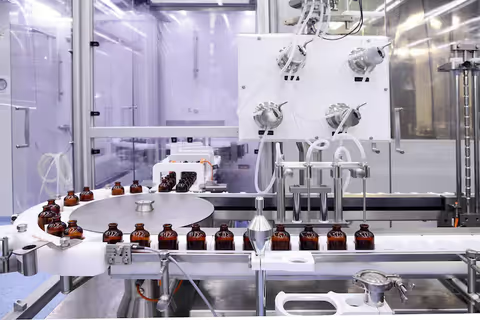
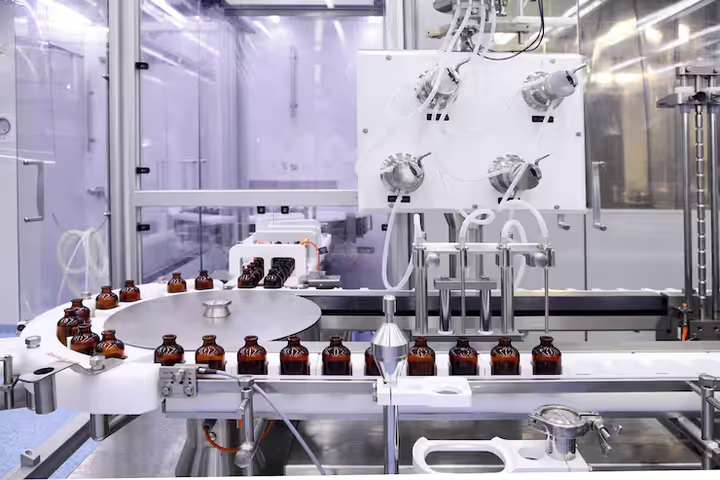
| Sterile Filling Machine | Fill injectable medicines into vials | Vaccine and injectable drugs |
| High Shear Mixer | Blend active ingredients with excipients | Powder mixing |
These machines form the backbone of pharmaceutical production facilities around the world.
Recent Developments in Pharmaceutical Manufacturing Technology
The pharmaceutical manufacturing sector has experienced rapid technological changes over the past few years. These developments are focused on improving production efficiency, safety, and traceability.
In 2025 and 2026, several key trends have shaped pharmaceutical equipment development.
One important trend is the adoption of continuous manufacturing systems. Unlike traditional batch manufacturing, continuous production allows medicines to be produced in a steady flow, improving consistency and reducing production time.
Another major development is the integration of automation and digital monitoring systems. Pharmaceutical facilities increasingly use sensors, data analytics, and artificial intelligence to monitor production parameters in real time.
In 2026, several pharmaceutical manufacturers expanded investments in robotic packaging systems. These systems help reduce contamination risks and improve packaging accuracy for sensitive medicines.
Additionally, single-use manufacturing technologies have gained attention, particularly in biologics production. These disposable systems reduce cleaning requirements and help speed up manufacturing changeovers.
Digitalization has also improved equipment maintenance. Predictive maintenance systems now use machine data to detect potential equipment issues before they disrupt production.
These innovations support more efficient pharmaceutical manufacturing and help facilities meet global regulatory standards.
Regulations and Policies Affecting Pharmaceutical Equipment
Pharmaceutical manufacturing equipment must comply with strict regulatory standards to ensure medicine safety and quality.
Regulatory agencies around the world establish guidelines that govern how pharmaceutical products are produced. These rules also apply to the design, operation, and maintenance of manufacturing equipment.
One of the most important regulatory frameworks is Good Manufacturing Practice (GMP). GMP guidelines ensure that pharmaceutical products are consistently produced and controlled according to quality standards.
Regulatory agencies that oversee pharmaceutical manufacturing include:
• US Food and Drug Administration (FDA)
• European Medicines Agency (EMA)
• Central Drugs Standard Control Organization (CDSCO) in India
• World Health Organization (WHO)
These organizations require pharmaceutical companies to validate manufacturing equipment and demonstrate that it performs reliably under controlled conditions.
Equipment validation typically includes:
• Installation Qualification (IQ)
• Operational Qualification (OQ)
• Performance Qualification (PQ)
In India, pharmaceutical manufacturers must follow regulations under the Drugs and Cosmetics Act and comply with Schedule M guidelines for pharmaceutical production facilities.
These policies ensure that pharmaceutical equipment meets strict standards for hygiene, safety, and production consistency.
Tools and Resources Related to Pharmaceutical Manufacturing Equipment
Professionals involved in pharmaceutical manufacturing often rely on digital tools, regulatory resources, and technical platforms to manage production systems.
These tools help monitor equipment performance, manage compliance documentation, and optimize manufacturing processes.
Common tools and resources include:
• Manufacturing Execution Systems (MES) for production monitoring
• Enterprise Resource Planning (ERP) software for manufacturing planning
• Equipment validation documentation templates
• Pharmaceutical process simulation software
• Quality management systems (QMS)
• Equipment calibration management tools
Educational and research platforms also provide valuable information on pharmaceutical manufacturing technology.
Useful knowledge resources include:
• Pharmaceutical engineering journals
• Regulatory guidance documents from global health authorities
• Industrial manufacturing technology publications
• Scientific research databases related to drug production
These resources help researchers, engineers, and regulatory professionals understand equipment performance and maintain compliance with evolving industry standards.
Frequently Asked Questions
What is pharmaceutical manufacturing equipment?
Pharmaceutical manufacturing equipment includes machines and systems used to produce medicines, vaccines, and pharmaceutical formulations. These machines perform processes such as mixing, granulation, tablet compression, coating, filling, and packaging.
Why is specialized equipment needed for pharmaceutical production?
Pharmaceutical products require extremely precise manufacturing conditions. Specialized equipment ensures accurate dosage, sterile production environments, and compliance with safety standards required by regulatory authorities.
What are the main categories of pharmaceutical manufacturing machines?
Common categories include mixing equipment, granulation machines, drying systems, tablet presses, capsule filling machines, coating equipment, sterile filling systems, and packaging machines.
How is pharmaceutical equipment validated?
Equipment validation involves confirming that machines operate correctly and consistently. Validation processes typically include installation qualification, operational qualification, and performance qualification.
What role does automation play in pharmaceutical manufacturing?
Automation improves accuracy, efficiency, and traceability in pharmaceutical production. Automated systems can monitor production conditions, reduce human error, and ensure consistent product quality.
Conclusion
Pharmaceutical manufacturing equipment forms the technological foundation of modern medicine production. These machines enable pharmaceutical companies to produce safe, effective, and standardized medicines at large scale.
As healthcare demand continues to grow, manufacturing technologies are evolving to support higher production efficiency and stronger quality control. Advances in automation, continuous manufacturing, and digital monitoring are reshaping pharmaceutical facilities worldwide.
Regulatory frameworks also play a critical role in ensuring that pharmaceutical equipment operates within strict safety and quality guidelines. Compliance with global manufacturing standards helps maintain public trust in pharmaceutical products.
Understanding pharmaceutical manufacturing equipment provides valuable insight into how medicines move from research laboratories to large-scale production. These systems remain essential for supporting global healthcare and ensuring that medicines reach patients safely and reliably.