Centrifugal Compressors Guide: Discover Details, Resources, and Key Facts
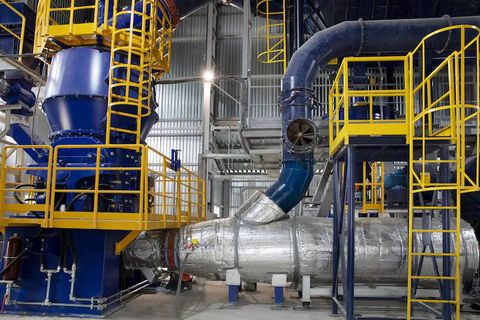
Centrifugal compressors are mechanical devices used to increase the pressure of gases by converting kinetic energy into pressure energy. They operate using a rotating impeller that accelerates gas outward from the center of rotation. As the gas velocity increases, a diffuser slows the flow and converts velocity into higher pressure.
The concept of centrifugal compression emerged during the late 19th century alongside advancements in turbomachinery. Over time, improvements in aerodynamics, materials science, and digital monitoring have made centrifugal compressors more efficient and reliable. Today, they play a central role in industries such as energy, manufacturing, petrochemicals, and environmental engineering.
Understanding centrifugal compressors helps engineers, students, and decision-makers evaluate how large-scale gas systems operate and why these machines remain essential in modern infrastructure.
Why Centrifugal Compressors Matter Today
Centrifugal compressors are important because they address the growing demand for efficient gas compression in large systems. They are designed to handle high flow rates with relatively stable output, making them suitable for continuous operations.
Key reasons this topic matters include:
-
Increasing global energy demand requiring reliable compression systems
-
Expansion of industrial automation and process optimization
-
Focus on energy efficiency and reduced operational losses
-
Growing use in air separation, refrigeration, and power generation
Industries affected by centrifugal compressors include:
-
Power generation facilities
-
Oil and gas processing plants
-
Chemical and petrochemical industries
-
Water treatment and wastewater management
-
Large-scale HVAC and cooling systems
By providing consistent compression with fewer moving parts than some alternatives, centrifugal compressors help reduce mechanical wear and improve long-term operational stability.
How Centrifugal Compressors Work: Basics and Explanation
At the core of a centrifugal compressor is a high-speed rotating impeller. Gas enters the compressor near the center of the impeller and is accelerated outward due to centrifugal force. As the gas velocity increases, it passes through a diffuser where kinetic energy is converted into pressure energy.
Main Components
-
Impeller – Accelerates the gas using rotational motion
-
Diffuser – Converts velocity into pressure
-
Casing – Directs gas flow and contains pressure
-
Shaft and bearings – Support rotation and alignment
Simplified Working Flow
-
Gas enters the inlet section
-
The impeller increases gas velocity
-
The diffuser slows the gas and raises pressure
-
Compressed gas exits through the discharge section
Comparison Table: Centrifugal vs Other Compressor Types
| Feature | Centrifugal Compressors | Reciprocating Compressors |
|---|---|---|
| Flow type | Continuous | Pulsating |
| Moving parts | Fewer | More |
| Capacity | High volume | Lower volume |
| Maintenance frequency | Lower | Higher |
| Typical use | Large systems | Smaller systems |
This comparison highlights why centrifugal compressors are preferred in high-capacity applications.
Recent Updates and Industry Trends (2025–2026)
Over the past year, centrifugal compressor technology has continued to evolve. Several notable developments have shaped current usage:
-
2025: Increased adoption of digital condition monitoring systems using sensors and predictive analytics
-
2025: Improved impeller designs focused on aerodynamic efficiency and reduced energy losses
-
Early 2026: Integration with industrial automation platforms for real-time performance tracking
-
2026: Greater emphasis on low-emission and energy-efficient compressor systems in heavy industries
Manufacturers and operators are increasingly focusing on lifecycle performance rather than just initial output, aligning with global efficiency goals.
Regulations, Standards, and Policies
Centrifugal compressors are influenced by technical standards and regulatory frameworks that ensure safety, efficiency, and environmental compliance.
Common regulatory areas include:
-
Energy efficiency standards set by national and international agencies
-
Industrial safety regulations governing pressure equipment
-
Environmental policies related to emissions and energy consumption
-
ISO and API standards defining design, testing, and performance benchmarks
In countries such as India, centrifugal compressors used in industrial environments must comply with pressure vessel rules and energy conservation guidelines issued by relevant authorities. Similar frameworks exist in the United States, European Union, and other regions.
Regulations help ensure that compressors operate safely while supporting broader sustainability objectives.
Tools and Resources for Learning and Analysis
Several tools and resources support understanding and analysis of centrifugal compressors:
-
Performance simulation software for compressor modeling
-
Energy efficiency calculators used in industrial assessments
-
Technical standards documentation (ISO, API references)
-
Engineering handbooks covering turbomachinery fundamentals
-
Educational platforms and technical journals focused on mechanical engineering
These resources provide structured information for learners and professionals seeking deeper technical knowledge.
Performance Factors and Key Parameters
The efficiency and performance of centrifugal compressors depend on multiple parameters:
-
Pressure ratio
-
Mass flow rate
-
Rotational speed
-
Gas properties
-
Ambient operating conditions
Example Performance Parameter Table
| Parameter | Description |
|---|---|
| Pressure ratio | Outlet pressure divided by inlet pressure |
| Flow rate | Volume or mass of gas moved |
| Efficiency | Energy conversion effectiveness |
| Speed | Impeller rotational velocity |
Understanding these parameters supports better system design and evaluation.
Frequently Asked Questions (FAQs)
What is a centrifugal compressor used for?
Centrifugal compressors are used to increase gas pressure in high-flow systems such as power plants, industrial processes, and cooling systems.
How is a centrifugal compressor different from other types?
It uses rotating impellers instead of pistons or screws, making it suitable for continuous, high-volume gas flow.
Are centrifugal compressors energy efficient?
They are generally efficient at large capacities, especially when operated near their design point.
What industries rely most on centrifugal compressors?
Energy, manufacturing, petrochemicals, water treatment, and large HVAC systems commonly use them.
Do centrifugal compressors require complex maintenance?
They typically have fewer moving parts, which can simplify maintenance compared to some alternatives.
Conclusion: Key Insights and Takeaways
Centrifugal compressors remain a cornerstone of modern industrial systems due to their ability to handle large gas volumes efficiently and reliably. Their working principle, based on kinetic energy conversion, allows stable performance in continuous operations.
Recent advancements in digital monitoring, efficiency optimization, and regulatory alignment have strengthened their relevance in today’s industrial landscape. By understanding their basics, importance, and performance factors, readers gain valuable technical knowledge applicable across multiple sectors.
As industries continue to prioritize efficiency, safety, and sustainability, centrifugal compressors will remain a vital component of large-scale gas compression systems.