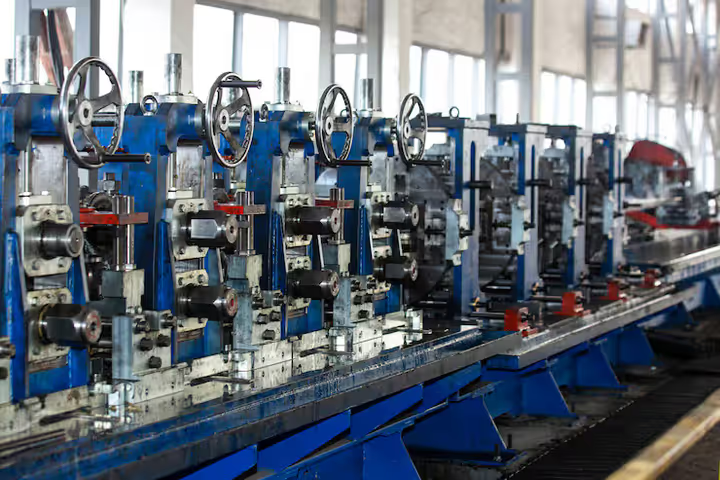
Blow Moulding Machines Knowledge for Manufacturing Industries
Blow moulding machines are industrial systems used to manufacture hollow plastic products such as bottles, containers, tanks, and automotive components. These machines shape heated plastic material into specific forms using air pressure inside a mould cavity.
The process exists to support large-scale plastic manufacturing where lightweight, durable, and uniform hollow products are required. Industries such as packaging, automotive, pharmaceuticals, and consumer goods rely heavily on blow moulding technology to produce consistent plastic components efficiently.
In today’s manufacturing environment, automation, polymer engineering, and industrial machinery play a major role in maintaining productivity and quality standards. Blow moulding machines are a central part of modern plastic processing systems.
Why Blow Moulding Machines Matter Today
Blow moulding machines are important because they enable high-volume production of essential products. From water bottles to chemical storage containers, these machines affect daily life and industrial supply chains.
They help solve key manufacturing challenges such as:
-
Mass production with consistent quality
-
Lightweight packaging for logistics efficiency
-
Custom shape manufacturing for branding and design
-
Reduced material waste through optimized polymer usage
Industries influenced by blow moulding technology include:
-
Packaging manufacturing
-
Automotive components production
-
Pharmaceutical container manufacturing
-
Food and beverage packaging
-
Industrial chemical storage systems
As global demand for plastic packaging and recyclable materials grows, advanced polymer processing and automation systems are becoming increasingly important.
Types of Blow Moulding Machines
There are three primary types of blow moulding machines used in industrial production:
| Type | Process Description | Common Applications |
|---|---|---|
| Extrusion Blow Moulding | Molten plastic is extruded into a tube and inflated | Bottles, drums |
| Injection Blow Moulding | Plastic is injected into a preform and then blown | Medical containers |
| Stretch Blow Moulding | Preform is stretched and blown for strength | PET beverage bottles |
Each type serves different production needs depending on material properties, product design, and production volume.
Recent Updates and Industry Trends (2025)
The blow moulding industry has seen several technological improvements over the past year. In 2025, manufacturers are increasingly integrating industrial automation systems and IoT-enabled monitoring tools into blow moulding equipment.
Key developments include:
-
Energy-efficient servo-driven machinery introduced in early 2025
-
AI-based quality inspection systems adopted in mid-2025
-
Increased use of recycled PET (rPET) materials due to sustainability policies
-
Smart manufacturing dashboards for real-time performance analytics
The global plastic manufacturing sector has also responded to environmental concerns by adopting advanced recycling-compatible moulding systems. Automation software and predictive maintenance tools are now standard features in many high-performance blow moulding units.
These updates improve:
-
Energy efficiency
-
Production accuracy
-
Equipment lifespan
-
Environmental compliance
Regulatory and Policy Environment
Blow moulding operations are influenced by industrial safety regulations, environmental laws, and manufacturing standards.
In many countries, plastic manufacturing facilities must comply with:
-
Environmental protection regulations related to plastic waste management
-
Occupational health and safety standards for industrial machinery
-
Energy efficiency guidelines
-
Recycling and extended producer responsibility (EPR) policies
For example, in 2025, several countries strengthened plastic recycling regulations, encouraging manufacturers to incorporate recycled materials into production lines. Environmental compliance frameworks often require:
-
Waste management documentation
-
Emission control systems
-
Safe machinery operation protocols
-
Polymer material traceability
Manufacturers must also follow international quality standards such as ISO certifications for plastic processing and industrial manufacturing.
Tools and Resources for Blow Moulding Technology
Several tools and digital platforms support professionals working with blow moulding machines:
Simulation and Design Software
-
CAD software for mould design
-
Finite element analysis tools for stress testing
-
Polymer flow simulation platforms
Industrial Automation Tools
-
PLC programming systems
-
SCADA monitoring software
-
Predictive maintenance analytics tools
Material Testing Equipment
-
Melt flow index testers
-
Thickness measurement devices
-
Pressure testing systems
Online Resources
-
Industrial standards documentation websites
-
Manufacturing technology journals
-
Polymer research databases
These tools help engineers and production managers improve process efficiency, reduce downtime, and maintain consistent product quality.
Production Efficiency Comparison
Below is a simplified production efficiency comparison chart for typical machine categories:
| Feature | Standard Machine | Automated Machine |
|---|---|---|
| Energy Consumption | Moderate | Lower due to servo systems |
| Quality Control | Manual inspection | AI-assisted monitoring |
| Downtime Risk | Higher | Reduced via predictive analytics |
| Production Speed | Stable | Optimized with automation |
Automation and industrial IoT integration are increasingly influencing performance metrics in 2025 manufacturing environments.
Frequently Asked Questions
What is the main function of a blow moulding machine?
A blow moulding machine shapes heated plastic into hollow forms by inflating it inside a mould cavity using compressed air.
What materials are commonly used in blow moulding?
Common materials include polyethylene (PE), polypropylene (PP), polyethylene terephthalate (PET), and recycled polymers.
How is blow moulding different from injection moulding?
Blow moulding produces hollow objects, while injection moulding typically creates solid plastic components. The processes differ in mould design and air pressure usage.
Are blow moulding machines environmentally sustainable?
Modern machines support energy-efficient operations and recycled material usage. Sustainability depends on material selection, energy systems, and waste management practices.
What industries use blow moulding machines the most?
Packaging, food and beverage, pharmaceuticals, automotive manufacturing, and industrial storage sectors frequently use blow moulding technology.
Conclusion
Blow moulding machines play a significant role in modern plastic manufacturing and industrial automation. They enable efficient production of hollow plastic products that support packaging, healthcare, automotive, and industrial supply chains.
Recent technological advancements in 2025, including AI-driven inspection systems and energy-efficient servo technology, are reshaping how manufacturers approach polymer processing. At the same time, evolving environmental regulations encourage responsible material use and recycling integration.
Understanding blow moulding machines helps businesses, engineers, and students appreciate the technical foundation behind everyday plastic products. As manufacturing technology continues to evolve, blow moulding systems remain central to industrial productivity and sustainable material innovation.