Printing Machines Overview: Types, Functions, and Industrial Applications Explained
Printing machines are mechanical or digital devices that reproduce text, images, or patterns on materials such as paper, fabric, metal, or plastic. They form the backbone of the publishing, packaging, textile, and advertising industries.
The concept of printing dates back to the 15th century with Johannes Gutenberg’s invention of the printing press, which revolutionized the spread of knowledge. Today, printing machines have evolved from traditional manual presses to high-speed digital and offset printers capable of producing precise, colorful, and large-scale prints in minutes.
Modern printing systems combine mechanical design, electronic control, and software automation, making them indispensable in manufacturing, branding, and product customization.
Importance
Printing machines are crucial for communication, commerce, and creative industries. They play a role in nearly every aspect of daily life — from books and newspapers to product packaging, signage, and apparel.
Why Printing Machines Matter
-
Mass Production: Enable high-volume printing with uniform quality.
-
Customization: Allow on-demand prints for personalized marketing and design.
-
Brand Identity: Used extensively for packaging, advertising, and product labeling.
-
Education and Publishing: Support information sharing through printed materials.
-
Industrial Use: Employed in textiles, electronics, and 3D manufacturing.
In a digital era, printing machines continue to evolve by integrating automation, data-driven control, and eco-friendly technologies for efficiency and sustainability.
Recent Updates
The printing industry in 2024–2025 has seen remarkable transformations driven by innovation, sustainability, and digitalization.
Key Developments
-
Digital Printing Dominance (2024): Digital presses, such as inkjet and laser, now account for a significant share of the global printing market due to their flexibility and minimal setup time.
-
3D Printing Expansion: Additive manufacturing has expanded into medical, construction, and aerospace sectors, offering precise, layer-by-layer fabrication.
-
Eco-Friendly Inks and Materials: Growing demand for water-based, soy-based, and UV-curable inks to reduce environmental impact.
-
AI & Automation Integration (2025): Modern machines include AI-driven print optimization, color correction, and predictive maintenance features.
-
On-Demand Printing: Businesses increasingly use short-run and variable data printing for packaging and marketing customization.
-
Hybrid Printing Solutions: Combining analog and digital techniques for improved quality and cost-efficiency.
These updates show how the industry is embracing smart manufacturing, sustainability, and digital flexibility.
Laws or Policies
Printing machines and operations are subject to various industrial, safety, and environmental regulations depending on the country.
Major Regulations and Standards
-
ISO 12647 Series: Defines color management and printing process control for consistency and quality.
-
Occupational Safety Guidelines: Ensure safe operation of high-speed and high-temperature machinery.
-
Environmental Standards: Encourage use of eco-friendly inks and recyclable substrates to minimize pollution.
-
Copyright and Printing Laws: Govern reproduction rights to prevent unauthorized printing of copyrighted materials.
-
Energy Efficiency Regulations: Promote energy-saving machinery under industrial sustainability programs.
-
Indian BIS Standards (IS 14248): Establish quality and safety benchmarks for printing machines in India.
Compliance with these regulations helps ensure that printing operations are safe, sustainable, and legally sound.
Tools and Resources
A wide range of tools and learning resources are available for professionals and learners interested in printing technologies.
| Category | Tool / Platform | Purpose / Use Case |
|---|---|---|
| Design Software | Adobe Illustrator, CorelDRAW, Canva | Preparing artwork and print layouts |
| Printing Equipment Brands | Heidelberg, HP Indigo, Canon, Epson, Komori | Manufacturing commercial and digital printing systems |
| Online Learning Platforms | LinkedIn Learning, Coursera, Skillshare | Courses on printing technology and color management |
| Color Calibration Tools | X-Rite i1 Display, Datacolor Spyder | Maintain accurate color reproduction |
| Industry Resources | FESPA, Printing United Alliance, PrintWeek | News, trends, and professional insights |
Practical Tips
-
Ensure regular machine maintenance to avoid misprints and downtime.
-
Calibrate colors periodically to maintain print accuracy.
-
Use high-quality substrates compatible with your machine type.
-
Optimize file resolution and print settings for the desired output.
-
Keep printing environments clean and temperature-controlled for best results.
These practices enhance both print quality and operational efficiency.
Types of Printing Machines
| Type | Description | Common Uses |
|---|---|---|
| Offset Printing Machine | Uses plates and rollers to transfer ink to paper. | Newspapers, magazines, packaging |
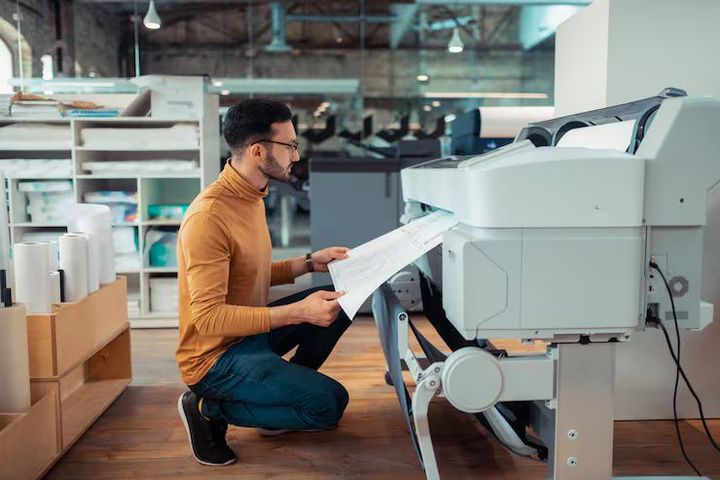
| Digital Printing Machine | Directly prints from a digital file without plates. | Short runs, brochures, marketing materials |
| Screen Printing Machine | Forces ink through a mesh stencil. | Textiles, signage, labels |
| Flexographic Printing Machine | Uses flexible plates for printing on uneven surfaces. | Plastic packaging, cartons, labels |
| Gravure Printing Machine | Employs engraved cylinders for high-quality images. | Decorative printing, wallpapers, high-volume packaging |
| 3D Printing Machine | Builds objects layer-by-layer using polymers or metals. | Prototyping, manufacturing, healthcare |
Each type serves specific industry needs, balancing speed, cost, and print precision.
Working Principle
The core function of a printing machine involves image transfer and ink application through mechanical or digital means.
-
Image Preparation: The design or text is created digitally or using a printing plate.
-
Ink Application: Ink or toner is applied to the plate, roller, or directly onto the substrate.
-
Image Transfer: The image is transferred from the plate or print head to the material.
-
Fixing or Curing: Heat, UV light, or pressure is used to dry and fix the print.
-
Finishing: Includes cutting, binding, coating, or folding as per end-use requirements.
This process varies by printing type but always focuses on accuracy, efficiency, and consistency.
Printing Industry Applications
Printing machines serve a diverse range of industrial and commercial purposes.
| Industry | Application Example |
|---|---|
| Publishing | Books, newspapers, magazines |
| Packaging | Labels, boxes, wrappers |
| Advertising | Posters, banners, signage |
| Textile | Fabric patterns and garment prints |
| Electronics | Circuit board labeling and design |
| 3D Manufacturing | Rapid prototyping and customized parts |
Their adaptability makes them essential tools across creative, industrial, and manufacturing sectors.
FAQs
Q1. What is the difference between digital and offset printing?
Digital printing uses no physical plates and is ideal for small batches or variable data, while offset printing uses plates for high-volume, consistent-quality production.
Q2. Which printing machine is best for packaging?
Flexographic and gravure printing machines are widely used in packaging due to their ability to handle flexible materials and long runs.
Q3. How does 3D printing differ from traditional printing?
Traditional printing applies ink on flat surfaces, while 3D printing creates physical objects layer by layer using digital models.
Q4. What maintenance does a printing machine require?
Routine cleaning, roller alignment, ink viscosity checks, and software calibration ensure smooth operation and long equipment life.
Q5. Is printing becoming obsolete in the digital age?
No. While digital media is growing, printing remains essential in packaging, manufacturing, and branding industries, adapting through eco-friendly and smart innovations.
Conclusion
Printing machines continue to bridge the gap between creativity and manufacturing, transforming raw designs into tangible products. From offset and screen printing to cutting-edge digital and 3D technologies, they remain integral to both industrial and artistic production.
As the industry embraces automation, sustainability, and digital transformation, printing machines are becoming more intelligent, efficient, and environmentally responsible.
Learning about printing machinery helps professionals, students, and business owners make informed decisions in production planning, design, and technology adoption—ensuring quality, precision, and innovation in every print.