Laminator Machines Guide: Explore Fundamentals, Key Insights, and Essential Information
Laminator machines are devices designed to apply a protective layer over documents, photographs, identification cards, printed materials, and various types of artwork. They exist to enhance durability, preserve quality, and safeguard materials from moisture, dirt, and physical damage. Laminators play an important role in offices, schools, design studios, manufacturing environments, and packaging systems. Their simple but effective mechanism allows users to seal items between layers of plastic film, maintaining long-term clarity and protection.
As laminated materials remain widely used in organizational processes, record-keeping, and product labeling, understanding how laminator machines function is essential for students, educators, office teams, designers, and anyone working with printed materials.
Context
A laminator machine operates by bonding plastic film to a material using heat, pressure, or adhesive technology. The basic concept is to create a protective barrier that strengthens and shields the laminated item from wear and tear.
There are multiple types of laminator machines, including:
-
Pouch laminators for small items such as cards and documents
-
Roll laminators for large sheets, posters, or continuous materials
-
Cold laminators for heat-sensitive items
-
Thermal laminators for fast, durable sealing
-
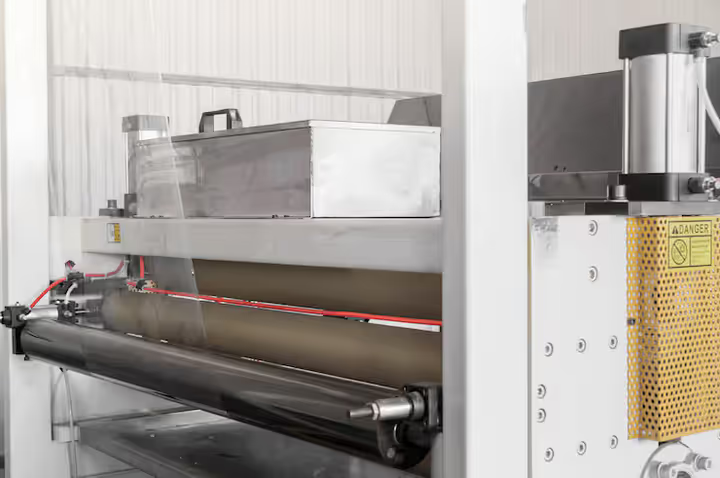
Industrial laminators used for manufacturing packaging materials
Each machine uses a combination of rollers, temperature controls, and pressure systems to achieve a smooth, bubble-free seal.
Typical components include:
-
Feed tray
-
Heated rollers or cold-pressure rollers
-
Laminating film or pouches
-
Temperature and speed controls
-
Cooling units for stabilization
The machine feeds the material through rollers, causing the plastic layers to bond evenly across the surface. The result is a smooth, durable finish that enhances structural integrity and visual quality.
Importance
Laminator machines remain important because they provide protection, preservation, and clarity for a wide range of printed materials. Their use supports safety, organization, long-term durability, and professional presentation.
Key reasons laminator machines matter:
-
Protect documents from moisture, stains, and handling wear
-
Increase the lifespan of educational materials, signage, and reference charts
-
Improve readability by preventing ink smudging and fading
-
Enhance durability in high-use environments such as schools and workplaces
-
Support industrial packaging processes that require laminated finishes
-
Enable professional presentation of menus, displays, charts, and IDs
With an increasing demand for durable printed materials and packaged products, laminator machines continue to be relevant and widely used across industries.
Recent Updates
Between 2024 and 2025, laminator machine technology has seen updates that improve efficiency, user safety, energy control, and film quality. Manufacturers have introduced enhancements to support smoother operation, reduced maintenance, and improved sustainability.
Notable recent updates include:
-
Energy-efficient heating elements that reduce power usage (2024–2025)
-
Improved roller technology resulting in smoother lamination with fewer air bubbles
-
Smarter temperature-control systems ensuring consistent sealing across different film types
-
Introduction of eco-friendly laminating films, supporting sustainability goals
-
Enhanced safety sensors preventing finger contact near rollers
-
Faster warm-up times, enabling quicker workflow for high-volume tasks
-
Advanced anti-jam mechanisms reducing downtime
Large-format laminators have also gained improvements in film alignment accuracy, making them more efficient for signage, packaging, and commercial printing operations.
Laws or Policies
While laminator machines themselves are not heavily regulated, they fall under general manufacturing, safety, and environmental guidelines. These rules ensure safe operation, proper material handling, and compliance with national and workplace standards.
Key policy areas influencing laminator use:
Equipment Safety Regulations
-
Heat safety requirements for electrical devices
-
Guidelines for roller protection and anti-jam features
-
Standards for insulated handles, switches, and housing materials
Workplace Safety Policies
-
Training expectations for operating heated equipment
-
Ventilation guidelines for enclosed spaces
-
Safe handling of plastic films and adhesives
Environmental and Material Standards
-
Rules for recyclable laminating film
-
Restrictions on certain plastic additives
-
Waste-management guidelines for laminated materials
Electrical Compliance
-
Certification for voltage and wiring safety
-
Requirements for grounding and overload protection
These rules protect users, ensure proper functioning, and reduce environmental impact.
Tools and Resources
Laminator machines rely on supporting tools, accessories, and resources that help improve lamination quality and maintenance.
Operational Tools
-
Cutting tools for trimming laminated edges
-
Corner rounders for preventing sharp film edges
-
Alignment guides for straight feeding
-
Laminating pouches and rolls in various thicknesses
Maintenance Tools
-
Roller cleaning kits
-
Heat-control calibration sheets
-
Anti-static cloths for dust prevention
-
Diagnostic charts for troubleshooting film jams
Learning and Knowledge Resources
-
Laminator-operation guides
-
Online tutorials for film selection
-
Material compatibility charts
-
Temperature-setting reference sheets
Workplace Resources
-
Safety guidelines for handling heated machines
-
Storage solutions for rolls and pouches
-
Film-type selection references for specific projects
These tools make laminator operation more effective and help maintain machine performance over time.
Table: Types of Laminator Machines and Their Uses
| Laminator Type | Description | Common Applications |
|---|---|---|
| Pouch Laminator | Uses film pouches and heated rollers | Documents, IDs, certificates |
| Roll Laminator | Uses continuous film rolls | Posters, charts, signage |
| Cold Laminator | Uses pressure instead of heat | Photos, heat-sensitive materials |
| Thermal Laminator | Uses heat to bond film | Heavy-duty lamination |
| Industrial Laminator | High-capacity systems for manufacturing | Packaging, labels, commercial printing |
Table: Key Components of a Laminator Machine
| Component | Purpose | Insight |
|---|---|---|
| Heated Rollers | Apply heat and pressure | Essential for bubble-free sealing |
| Feed Tray | Guides items into machine | Reduces alignment errors |
| Film Pouch or Roll | Plastic layer used for protection | Thickness affects durability |
| Cooling Plate | Stabilizes laminated output | Prevents warping |
| Temperature Control | Adjusts heat level | Ensures compatibility with film type |
FAQs
What is a laminator machine used for?
A laminator machine protects documents, photographs, signage, and printed materials by sealing them between plastic layers to improve durability and appearance.
What types of materials can be laminated?
Common materials include paper, photos, posters, labels, cards, and some thin fabrics. The compatibility depends on the laminator type and heat settings.
Do laminators require warm-up time?
Thermal laminators require warm-up time for the rollers to reach the correct temperature, while cold laminators operate without heat.
Is film thickness important?
Yes. Thicker film provides more durability but requires higher temperature and pressure, while thinner film offers flexibility and easier handling.
How can lamination quality be improved?
Using proper film thickness, maintaining clean rollers, ensuring correct temperature, and aligning materials properly all contribute to smoother lamination.
Conclusion
Laminator machines play a valuable role in preserving, protecting, and enhancing the appearance of printed materials. Their adaptable design, ease of use, and versatility make them suitable for educational settings, workplaces, creative studios, and industrial manufacturing environments. With recent updates in film quality, machine safety, energy efficiency, and precision controls, laminators continue to evolve as useful tools for both everyday applications and specialized production tasks. Understanding their fundamentals, components, policies, and available resources offers a strong foundation for effective and knowledgeable lamination practices.