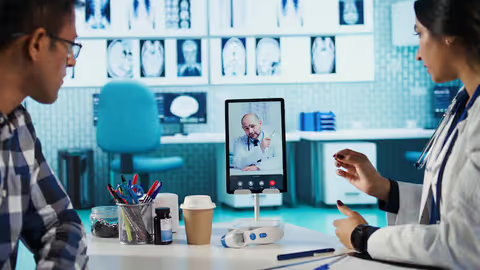
Healthcare systems generate vast volumes of information every day. Electronic health records (EHRs), diagnostic imaging, insurance claims, and patient monitoring devices contribute to what is commonly called healthcare big data. Health data analytics exists to organize this complex information and transform it into meaningful patterns that healthcare professionals can interpret.
The growth of digital health infrastructure, cloud computing in healthcare, and artificial intelligence in healthcare has made advanced analytics more accessible. Today, hospitals, research institutions, insurers, and public health agencies rely on clinical data management systems and predictive analytics models to guide decisions.
Health data analytics typically includes:
-
Descriptive analytics to understand past performance
-
Diagnostic analytics to determine causes of events
-
Predictive analytics in healthcare to forecast outcomes
-
Prescriptive analytics to recommend possible actions
These approaches help healthcare organizations move from reactive treatment toward proactive and preventive care strategies.
Why Health Data Analytics Matters Today
Health data analytics plays a central role in improving healthcare quality and sustainability. As healthcare systems face rising patient loads, chronic diseases, and operational pressures, data-driven decision-making has become essential.
Key areas where health data analytics makes an impact include:
-
Early disease detection using predictive modeling
-
Reducing hospital readmission rates
-
Optimizing staffing and resource allocation
-
Enhancing patient safety through real-time alerts
-
Supporting population health management initiatives
For patients, this means more personalized treatment plans and improved monitoring of long-term conditions. For healthcare providers, analytics improves clinical efficiency and reduces unnecessary procedures.
The integration of AI in healthcare has strengthened these benefits. Machine learning algorithms can analyze imaging scans, detect anomalies, and predict complications faster than traditional methods. Healthcare data security also becomes increasingly important, as sensitive patient information must be protected against breaches.
Below is a simplified comparison of traditional healthcare management versus analytics-driven healthcare:
| Area | Traditional Approach | Analytics-Driven Approach |
|---|
| Decision Making | Based on past experience | Based on real-time data insights |
| Risk Detection | After symptoms appear | Predictive early risk identification |
| Resource Allocation | Manual estimation | Data-optimized planning |
| Patient Monitoring | Periodic visits | Continuous digital monitoring |
Health data analytics affects hospitals, policymakers, insurance companies, researchers, and patients. It addresses problems such as inefficiency, delayed diagnoses, medical errors, and rising healthcare expenditures.
Recent Trends and Developments (2025–2026)
In 2025 and early 2026, several important developments have shaped health data analytics globally.
First, AI-powered clinical decision support systems have expanded significantly. Many hospitals are integrating advanced predictive analytics models to forecast patient deterioration and emergency risks in real time.
Second, interoperability improvements have gained attention. Health systems are working toward seamless data exchange between electronic health records platforms to improve coordination across providers.
Third, cybersecurity concerns have increased. In 2025, multiple healthcare sectors reported data breach incidents, prompting stronger investment in healthcare data security tools and zero-trust security frameworks.
Fourth, regulatory authorities have updated guidance on AI usage in clinical environments. Governments are emphasizing transparency, explainability, and risk assessment when deploying AI-based analytics tools in patient care.
Cloud-based healthcare analytics solutions have also expanded, allowing smaller institutions to access enterprise-level analytics capabilities without maintaining large on-premise infrastructure.
Laws, Regulations, and Policy Frameworks
Health data analytics is heavily influenced by data protection laws and healthcare regulations.
In the United States, the Health Insurance Portability and Accountability Act (HIPAA) sets standards for protecting sensitive patient information. Organizations must ensure compliance when handling electronic health records analytics and cloud-based systems.
In the European Union, the General Data Protection Regulation (GDPR) regulates personal data processing, including health data. It requires transparency, lawful processing, and strong data protection safeguards.
In India, the Digital Personal Data Protection Act, 2023 has established rules for handling personal data, including healthcare information. Additionally, the National Digital Health Mission supports digital health records and interoperability frameworks.
Other countries have similar frameworks that address:
-
Patient consent requirements
-
Cross-border data transfer restrictions
-
Cybersecurity compliance standards
-
Audit and reporting obligations
Healthcare organizations must integrate compliance measures into their clinical data management systems to avoid penalties and protect patient trust.
Government programs increasingly encourage secure digital health ecosystems. These policies promote standardized health data exchange formats, improved analytics capabilities, and stronger oversight of AI in healthcare.
Tools and Resources for Health Data Analytics
Various platforms and technologies support health data analytics implementation.
Commonly used tools include:
-
Electronic health records analytics platforms
-
Business intelligence dashboards for hospitals
-
Machine learning frameworks for predictive modeling
-
Data visualization software
-
Healthcare cybersecurity monitoring systems
Popular categories of tools:
| Category | Purpose |
|---|
| Data Warehousing Platforms | Store structured and unstructured data |
| Analytics Software | Analyze trends and clinical performance |
| Visualization Tools | Convert data into interactive dashboards |
| AI & Machine Learning Tools | Build predictive healthcare models |
| Compliance Monitoring Systems | Track regulatory requirements |
Healthcare organizations also rely on:
-
Government health data portals
-
Public health datasets
-
Clinical research databases
-
Academic research publications
-
Population health management software
Educational resources such as online health informatics courses and clinical data science programs help professionals build skills in healthcare analytics.
When selecting tools, organizations typically consider:
-
Data integration capabilities
-
Scalability
-
Security certifications
-
Regulatory compliance features
-
User accessibility for clinicians
Frequently Asked Questions
What is the main goal of health data analytics?
The primary goal is to improve healthcare outcomes by analyzing patient data, operational information, and clinical metrics to support informed decision-making.
How does predictive analytics in healthcare work?
Predictive analytics uses historical patient data, statistical models, and machine learning algorithms to forecast future health events, such as disease progression or hospital readmissions.
Is health data analytics secure?
Security depends on compliance with data protection regulations and the implementation of strong cybersecurity measures, including encryption, access controls, and monitoring systems.
Who uses health data analytics?
Hospitals, clinics, insurance providers, public health agencies, researchers, and policymakers use analytics to enhance care delivery and operational efficiency.
How does AI in healthcare relate to data analytics?
AI enhances analytics by processing large datasets quickly, identifying patterns, and generating predictive insights that support clinical decisions.
Conclusion
Health data analytics has become a foundational component of modern healthcare systems. By transforming complex medical information into actionable insights, it supports better clinical outcomes, efficient resource management, and stronger public health strategies.
Recent advancements in AI in healthcare, cloud computing, and predictive analytics continue to expand the capabilities of healthcare institutions. At the same time, regulatory frameworks such as HIPAA, GDPR, and national data protection laws ensure that patient privacy remains a priority.
As healthcare systems continue to digitize, the importance of secure, compliant, and well-structured health data analytics will grow. Understanding its principles, tools, and regulatory environment helps individuals and organizations navigate the evolving landscape of digital healthcare intelligence responsibly and effectively.
Disclaimer: The information provided in this article is for informational purposes only. We do not make any claims or guarantees regarding the accuracy, reliability, or completeness of the information presented. The content is not intended as professional advice and should not be relied upon as such. Readers are encouraged to conduct their own research and consult with appropriate professionals before making any decisions based on the information provided in this article.