TGF Beta Elisa Kit Basics: Understanding Cytokine Quantification Techniques
TGF Beta Elisa Kits are laboratory tools used to detect and measure Transforming Growth Factor Beta (TGF-β), a cytokine that plays a major role in immune regulation, cellular growth, tissue repair, and inflammation control. Cytokines such as TGF-β are signaling proteins that allow cells to communicate with each other, making them essential components in many biological and medical studies.
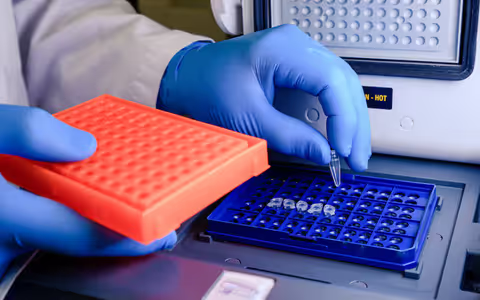
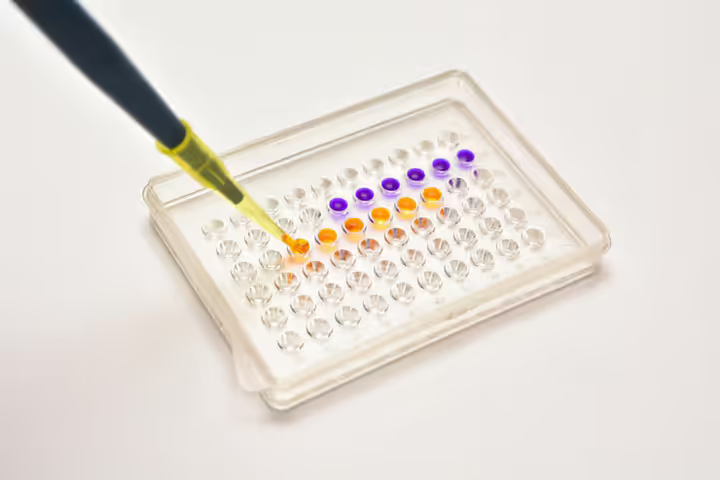
The ELISA (Enzyme-Linked Immunosorbent Assay) technique is widely used in molecular biology and biomedical research to quantify proteins within biological samples such as serum, plasma, cell culture media, or tissue extracts. A TGF Beta Elisa Kit contains specialized antibodies designed to bind specifically to TGF-β proteins, enabling precise measurement through enzyme-based color detection.
Researchers rely on cytokine analysis to understand immune responses, disease progression, and cellular behavior. In laboratory settings, ELISA technology provides a standardized approach for analyzing biomolecules with accuracy and reproducibility. Because TGF-β is involved in processes such as fibrosis, immune regulation, and tissue remodeling, detecting its concentration helps scientists study biological pathways and disease mechanisms.
The increasing focus on biomarker detection, molecular diagnostics, immunology research, and biotechnology innovation has expanded the relevance of ELISA kits in academic laboratories, pharmaceutical development, and biomedical studies worldwide.
Why TGF Beta Measurement Matters in Modern Biomedical Research
The importance of TGF-β analysis comes from the molecule’s involvement in many biological functions. It influences cell proliferation, immune tolerance, wound healing, and extracellular matrix formation. Because of this, abnormal TGF-β signaling has been linked to several medical conditions.
Researchers frequently analyze TGF-β levels when studying:
-
Immune system signaling pathways
-
Cancer biology and tumor microenvironment interactions
-
Fibrotic diseases affecting organs such as the liver or lungs
-
Tissue regeneration and wound healing mechanisms
-
Autoimmune responses and inflammatory disorders
TGF-β research has also gained attention in biopharmaceutical development, clinical biomarker research, and precision medicine studies. Scientists use cytokine measurement to evaluate biological responses during drug discovery experiments and therapeutic research.
Another reason for the growing interest in ELISA technology is its compatibility with high-throughput laboratory workflows. Modern laboratories require methods that provide reliable results across large sample sets. ELISA assays meet this need because they allow multiple samples to be processed simultaneously while maintaining standardized measurement procedures.
Additionally, the global expansion of biotechnology laboratories, diagnostic research facilities, and life science institutes has increased the demand for laboratory assays that support accurate biomarker quantification.
Recent Developments in Cytokine Detection and ELISA Technology
Over the past year, several developments in immunoassay technology and biomarker research have influenced how ELISA kits are designed and used.
In 2025, many life science technology providers introduced improved ELISA platforms with enhanced sensitivity for detecting low-abundance cytokines. These innovations allow researchers to analyze minute concentrations of proteins, which is particularly important for early-stage disease studies and immune signaling research.
Key trends observed between 2025 and early 2026 include:
-
Development of high-sensitivity ELISA assays capable of detecting picogram-level cytokine concentrations
-
Increased use of automated plate readers for faster and more consistent analysis
-
Integration of multiplex cytokine analysis platforms alongside traditional ELISA methods
-
Adoption of digital laboratory data systems for storing and analyzing assay results
Scientific publications during 2025–2026 also highlighted new insights into TGF-β signaling pathways in areas such as cancer immunology, regenerative medicine, and fibrosis research. As a result, cytokine quantification remains a critical tool for understanding biological processes at the molecular level.
Another notable trend is the integration of ELISA data with bioinformatics tools and laboratory information management systems (LIMS). These systems help researchers organize experimental data and analyze results more efficiently.
Regulatory Framework and Research Compliance
Although ELISA kits are primarily used in research environments, their development and application often fall under regulatory frameworks designed to maintain laboratory quality and data reliability.
Different countries maintain guidelines governing biomedical research, laboratory equipment standards, and assay validation. For example:
-
In the United States, laboratory testing environments often follow Clinical Laboratory Improvement Amendments (CLIA) standards for quality and accuracy.
-
The Food and Drug Administration (FDA) provides oversight for diagnostic assays intended for clinical use.
-
The European Union In Vitro Diagnostic Regulation (IVDR) outlines regulatory expectations for diagnostic technologies used in medical settings.
Research laboratories also follow internationally recognized standards such as Good Laboratory Practice (GLP). These guidelines ensure that experiments are conducted with reliable methods, accurate documentation, and traceable results.
In academic and pharmaceutical research institutions, laboratory compliance protocols help maintain consistency when analyzing cytokine biomarkers. Standard operating procedures and validation guidelines are used to ensure that ELISA assays produce reproducible data across different experiments and laboratories.
Helpful Tools and Resources for Cytokine Research
Scientists and laboratory researchers often rely on several digital and analytical tools when working with ELISA assays and cytokine detection methods.
These tools assist with experiment planning, data interpretation, and statistical analysis.
Common research tools include:
-
ELISA Plate Readers – Devices used to measure color changes that indicate protein concentration
-
Laboratory Information Management Systems (LIMS) – Software platforms used to store and organize experimental data
-
Graphing and Statistical Software – Used to analyze standard curves and calculate cytokine concentrations
-
Scientific Literature Databases – Online platforms containing peer-reviewed research studies
-
Laboratory Protocol Libraries – Digital resources providing standardized experimental procedures
Researchers also consult databases containing information about cytokines, immune signaling pathways, and protein interactions. These resources help scientists interpret assay results and understand how measured biomarkers relate to broader biological systems.
Common Components Found in a TGF Beta ELISA Kit
| Component | Purpose in the Assay |
|---|---|
| Capture Antibody | Binds specifically to TGF-β molecules in the sample |
| Detection Antibody | Attaches to the captured cytokine to enable measurement |
| Enzyme Conjugate | Produces a color reaction when substrate is added |
| Standard Protein Solutions | Used to generate calibration curves |
| Substrate Solution | Produces measurable color change during the reaction |
| Wash Buffer | Removes unbound materials between assay steps |
| Microplate Wells | Surface where the immunoassay reaction occurs |
This combination of reagents allows laboratories to quantify cytokine levels through a controlled biochemical reaction that produces measurable optical signals.
Frequently Asked Questions About TGF Beta Elisa Kits
What is TGF-β and why is it important?
Transforming Growth Factor Beta is a cytokine involved in regulating immune responses, cell growth, and tissue repair. It plays a critical role in maintaining biological balance within many cellular systems.
How does an ELISA assay detect cytokines?
ELISA assays use antibodies that bind specifically to target proteins. When the target molecule is captured, an enzyme reaction produces a detectable signal that indicates the concentration of the protein.
What types of samples can be analyzed?
Researchers commonly analyze serum, plasma, cell culture supernatants, and tissue extracts. Sample preparation methods vary depending on the biological material being studied.
Why is cytokine quantification useful in research?
Cytokine measurement helps scientists study immune responses, disease mechanisms, and molecular signaling pathways. These insights support advancements in biomedical and pharmaceutical research.
Are ELISA assays used outside research laboratories?
Yes. While many ELISA assays are used in research settings, similar immunoassay technologies are also applied in clinical diagnostics, environmental testing, and food safety analysis.
Conclusion
TGF Beta Elisa Kits play an important role in modern life science research by enabling accurate measurement of cytokines involved in cellular communication and immune regulation. Through the ELISA method, researchers can quantify proteins such as TGF-β with high specificity and reproducibility.
Advances in laboratory instrumentation, automation, and bioinformatics have expanded the capabilities of immunoassay technologies, allowing scientists to analyze complex biological processes more efficiently. As biomedical research continues to explore areas such as immune signaling, biomarker discovery, and precision medicine, cytokine detection techniques remain essential tools for scientific investigation.
By combining standardized assay methods with digital research tools and regulatory laboratory practices, ELISA technology continues to support progress in biotechnology, molecular biology, and medical research worldwide.
Disclaimer: The information provided in this article is for informational purposes only. We do not make any claims or guarantees regarding the accuracy, reliability, or completeness of the information presented. The content is not intended as professional advice and should not be relied upon as such. Readers are encouraged to conduct their own research and consult with appropriate professionals before making any decisions based on the information provided in this article.