Carbon Steel Sheet Explained: Discover Applications, and Helpful Knowledge
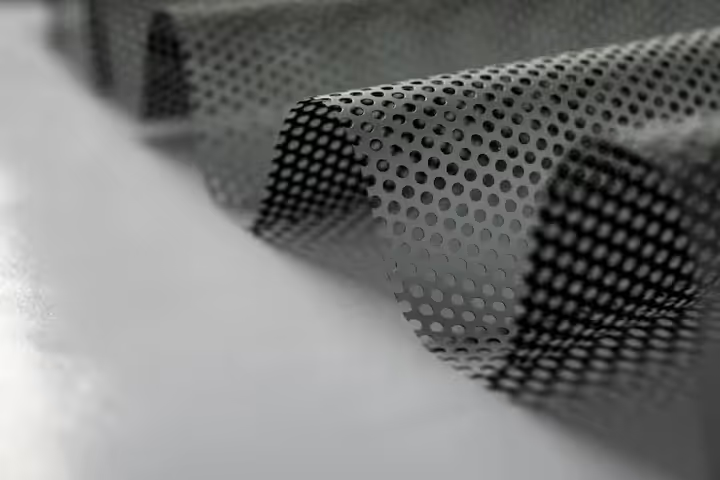
Carbon steel sheet is a commonly used flat-rolled metal product made primarily from iron and carbon. It exists because industries require a strong, durable, and easily formable material that can be produced in various thicknesses for structural and manufacturing applications. The carbon content typically ranges from low to high, influencing hardness, strength, and ductility.
The development of carbon steel sheets began with advancements in steelmaking technologies such as the Bessemer process and later electric-arc furnaces. These methods enabled large-scale production of uniform sheets that could support construction, machinery fabrication, transport components, and general engineering needs. Its versatility makes carbon steel sheet a fundamental material in both industrial and everyday applications.
Carbon steel sheet continues to be essential due to its balance of strength, workability, and affordability compared to many alloy materials. Industries rely on it for forming, welding, machining, and structural design.
Importance: Why Carbon Steel Sheet Matters Today
Carbon steel sheet plays a critical role in modern infrastructure, manufacturing systems, automotive frames, mechanical components, and equipment housings. Its importance stems from its ability to meet a wide range of performance requirements.
Who uses carbon steel sheet
-
Manufacturing units requiring standardized metal sheets
-
Construction professionals working with structural components
-
Automotive and transportation designers
-
Fabricators producing enclosures, platforms, and frames
-
Engineering teams working on industrial equipment
Challenges it helps solve
-
Need for a strong, formable material suitable for mass production
-
Requirement for controlled material properties such as tensile strength and hardness
-
Versatility in applications where uniform thickness and mechanical integrity are important
-
Support for welding, bending, cutting, and machining processes
Carbon steel sheet remains vital as industries move toward efficiency, sustainability, and precision engineering. Technology-driven sectors still depend on carbon steel due to its predictable performance and ability to be shaped into complex forms.
Recent Updates and Trends
The carbon steel sheet industry has seen several noteworthy developments between 2024 and 2025, driven by demand, manufacturing innovation, and sustainability goals.
Key trends from the past year
-
Advanced hot-rolling techniques (2024): Manufacturers adopted improved finishing stands to enhance surface quality and thickness accuracy.
-
Increased focus on low-emission steelmaking (2024–2025): Countries invested in reducing carbon intensity through hydrogen-based and electric-arc production systems.
-
Growth in automotive lightweighting strategies (2024): High-strength low-carbon sheets gained attention for structural reinforcement.
-
Rise of digital inspection tools (2025): Automated sensors and AI systems improved defect detection in rolling mills.
-
Greater use of recycled steel input (2024): Circular manufacturing trends contributed to higher scrap reuse in sheet-making processes.
These developments demonstrate efforts to enhance material performance while improving environmental impact and production efficiency.
Laws and Policies Affecting Carbon Steel Sheet
Regulations vary globally, but several key areas consistently shape carbon steel sheet production and usage. These policies focus on safety standards, environmental guidelines, and material quality consistency.
Common regulatory aspects
-
Material specifications: National standards bodies maintain composition and mechanical property requirements.
-
Environmental regulations: Steel plants must reduce emissions, control waste, and adhere to air-quality limits.
-
Safety compliance rules: Fabrication and handling of steel sheets follow occupational safety guidelines.
-
Trade and import policies: Many countries regulate steel sheet imports through quality certifications and tariff structures.
-
Recycling and sustainability directives: Governments encourage the use of recycled materials in steel production to reduce ecological impact.
These frameworks help maintain uniformity in manufacturing practices and ensure material reliability for industrial use.
Tools and Resources Related to Carbon Steel Sheet
Many technical tools and resources support engineers, designers, and students working with carbon steel sheet materials.
Technical Tools
-
Thickness and gauge calculators
-
Material property charts
-
Tensile strength comparison guides
-
Hardness conversion tables
-
Thermal expansion reference charts
Design Resources
-
Structural design templates
-
Pressure and load-bearing estimation tools
-
Welding compatibility charts
-
Fabrication process guidelines
-
Digital blueprint software
Table: Types of Carbon Steel Sheet by Carbon Content
| Type | Carbon Range | Key Characteristics | Typical Applications |
|---|---|---|---|
| Low Carbon Steel Sheet | Up to 0.30% | High ductility, good weldability | Automotive parts, forming operations |
| Medium Carbon Steel Sheet | 0.30%–0.60% | Higher strength, moderate hardness | Machinery components, structural parts |
| High Carbon Steel Sheet | 0.60%–1.00% | Strong, wear-resistant | Cutting tools, springs, industrial mechanisms |
Table: Mechanical Properties Overview
| Property | Typical Range in Carbon Steel Sheet |
|---|---|
| Tensile Strength | 270–700 MPa |
| Yield Strength | 180–500 MPa |
| Hardness (HB) | 90–200 HB |
| Elongation | 10%–40% |
| Density | ~7.85 g/cm³ |
FAQs
1. What is carbon steel sheet mainly made of?
Carbon steel sheet is primarily composed of iron and carbon, with small amounts of manganese, silicon, and other trace elements depending on the grade.
2. How does carbon content affect the properties of steel sheets?
Higher carbon content increases strength and hardness but reduces ductility and weldability. Lower carbon content improves formability and is easier to work with.
3. What thicknesses are commonly available?
Sheets are produced across a range of gauges, from very thin material for forming applications to thicker sheets suited for structural components.
4. Can carbon steel sheet be welded easily?
Low carbon steel sheet is typically easy to weld. Medium and high carbon sheets may require preheating or specific techniques to maintain joint integrity.
5. How is carbon steel sheet processed in industries?
Common processes include cutting, bending, rolling, stamping, welding, and surface treatment such as coating or galvanizing.
Conclusion
Carbon steel sheet continues to be a foundational material in global manufacturing, construction, and engineering due to its balanced mechanical properties and ability to adapt to diverse applications. Recent advancements in steelmaking, sustainability initiatives, and digital inspection technologies are shaping its evolution. With clear regulatory frameworks and widely available technical tools, carbon steel sheet remains a reliable and essential material for industries that require strength, durability, and efficient formability. Its importance is likely to continue as sectors expand their focus on resilient and sustainable material solutions.