Understanding EV Charging Stations: An Educational Overview with Electric Mobility Insights
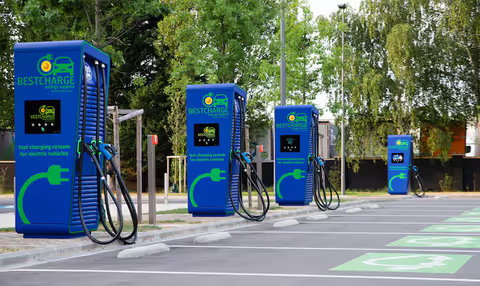
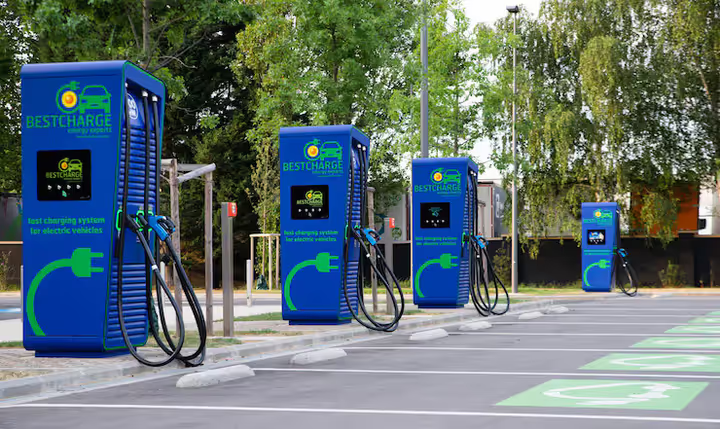
EV charging stations are infrastructure systems designed to supply electrical energy to electric vehicles so their batteries can be recharged. These stations exist to support the operation of electric mobility by enabling vehicles to replenish stored energy at homes, workplaces, public locations, and transit corridors. Without charging stations, electric vehicles would have limited usability beyond short-distance travel.
As electric vehicles emerged as alternatives to internal combustion engine vehicles, the need for reliable and accessible charging infrastructure became essential. Early charging solutions focused on basic electrical outlets, but as vehicle adoption increased, dedicated charging stations were developed to deliver higher power levels, improved safety, and standardized connections. These systems support controlled energy transfer between the power grid and vehicle batteries.
Today, EV charging stations form a critical component of the electric mobility ecosystem, supporting personal transportation, commercial fleets, and public transit electrification.
Importance: Why EV Charging Stations Matter Today
EV charging stations matter because they enable the practical adoption and daily use of electric vehicles. Their availability directly influences driving convenience, travel planning, and confidence in electric mobility.
Who relies on EV charging stations
-
Electric vehicle owners and drivers
-
Fleet and transportation operators
-
Urban planners and infrastructure developers
-
Commercial property managers
-
Public agencies supporting clean mobility
Key challenges EV charging stations help address
-
Range limitations of electric vehicles
-
Energy access during long-distance travel
-
Charging convenience in urban and residential areas
-
Integration of electric vehicles into daily routines
-
Support for fleet electrification initiatives
By providing predictable and accessible charging points, EV charging stations support the transition toward electric transportation systems.
Recent Updates and Trends (2024–2025)
EV charging infrastructure continues to evolve as electric vehicle adoption grows and charging technology advances.
Recent trends
-
Expansion of fast-charging networks (2024): Increased deployment of high-power charging stations along highways.
-
Smart charging integration (2024–2025): Use of software to manage load balancing and energy demand.
-
Standardization of charging connectors (2024): Improved compatibility across vehicle models.
-
Urban charging solutions (2025): Growth of curbside and shared residential charging installations.
-
Renewable energy integration (2025): Increased pairing of charging stations with solar and energy storage systems.
These trends reflect a focus on accessibility, efficiency, and grid-friendly charging infrastructure.
Laws and Policies Affecting EV Charging Stations
EV charging stations operate within regulatory frameworks related to electricity, safety, construction, and transportation.
Key regulatory considerations
-
Electrical safety standards: Define installation and operational requirements.
-
Building and zoning regulations: Influence placement and accessibility of charging stations.
-
Grid interconnection rules: Govern how stations connect to local power networks.
-
Environmental and energy policies: Encourage low-emission transportation infrastructure.
-
Accessibility guidelines: Address inclusive design and public usage requirements.
These policies help ensure charging stations are safe, reliable, and integrated into public infrastructure planning.
Tools and Resources Used with EV Charging Stations
EV charging stations rely on a combination of hardware systems, software platforms, and operational resources.
Charging Hardware and Control Tools
-
AC and DC charging units
-
Power electronics and converters
-
Vehicle-to-charger communication interfaces
-
Safety and protection devices
-
Cable and connector management systems
Monitoring and Management Resources
-
Charging session monitoring software
-
Energy usage tracking dashboards
-
Fault detection and alerting systems
-
User authentication and access controls
-
Maintenance and inspection documentation
These tools support reliable operation and efficient energy delivery.
Table: Common Types of EV Charging Stations
| Charging Type | Description |
|---|---|
| Level 1 Charging | Uses standard low-power electrical outlets |
| Level 2 Charging | Medium-power charging for homes and public locations |
| DC Fast Charging | High-power charging for rapid energy replenishment |
| Public Charging Stations | Accessible charging in shared locations |
| Private Charging Stations | Dedicated charging for specific users or fleets |
Table: Typical Locations for EV Charging Stations
| Location | Purpose |
|---|---|
| Residential Areas | Daily and overnight charging |
| Workplaces | Charging during work hours |
| Shopping Centers | Short-duration charging during visits |
| Highways | Long-distance travel support |
| Parking Facilities | Extended-duration charging |
EV Charging Station Operational Workflow Overview
A typical EV charging workflow includes:
-
Vehicle Connection
The vehicle is connected to the charging station. -
Authentication and Communication
The station and vehicle exchange charging parameters. -
Power Delivery
Electrical energy flows from the grid to the vehicle battery. -
Monitoring and Control
Charging speed and safety conditions are managed. -
Charging Completion
Energy transfer stops once charging criteria are met. -
Disconnection and Reporting
The vehicle disconnects and session data is recorded.
This workflow ensures safe and controlled battery charging.
FAQs
1. What are EV charging stations used for?
They are used to recharge the batteries of electric vehicles.
2. Do all EV charging stations provide the same charging speed?
No. Charging speed varies by station type and power level.
3. Can EV charging stations be used by different vehicle models?
Many stations support multiple vehicles through standardized connectors.
4. Why is charging infrastructure important for electric mobility?
It enables reliable and convenient use of electric vehicles.
5. Are EV charging stations only installed in public places?
No. They can be installed in residential, workplace, and private locations as well.
Conclusion
EV charging stations are a foundational element of the electric mobility ecosystem, enabling electric vehicles to operate reliably across diverse environments. By supplying controlled electrical energy through standardized and evolving technologies, these stations support daily transportation needs and long-distance travel alike. Recent trends toward fast charging, smart energy management, and urban integration highlight the rapid evolution of charging infrastructure. Supported by regulatory frameworks, advanced hardware, and monitoring tools, EV charging stations continue to play a crucial role in the global transition toward sustainable and electrified transportation systems.